


 9 / 30

09
“We are beyond thrilled to celebrate this commercial
approval and regulatory milestone,” said Norcia. “Pyka’s
aircraft provide an essential tool for protecting crops,
unlocking cost savings for growers, and reducing our
impact on the environment.”
He continued: “This commercial approval is the first
step in enabling us to generate massive value for
growers in the US, Latin America, and other markets
we operate in, while also laying the operational and
regulatory groundwork for eventual scaling into
uncrewed cargo operations worldwide.”
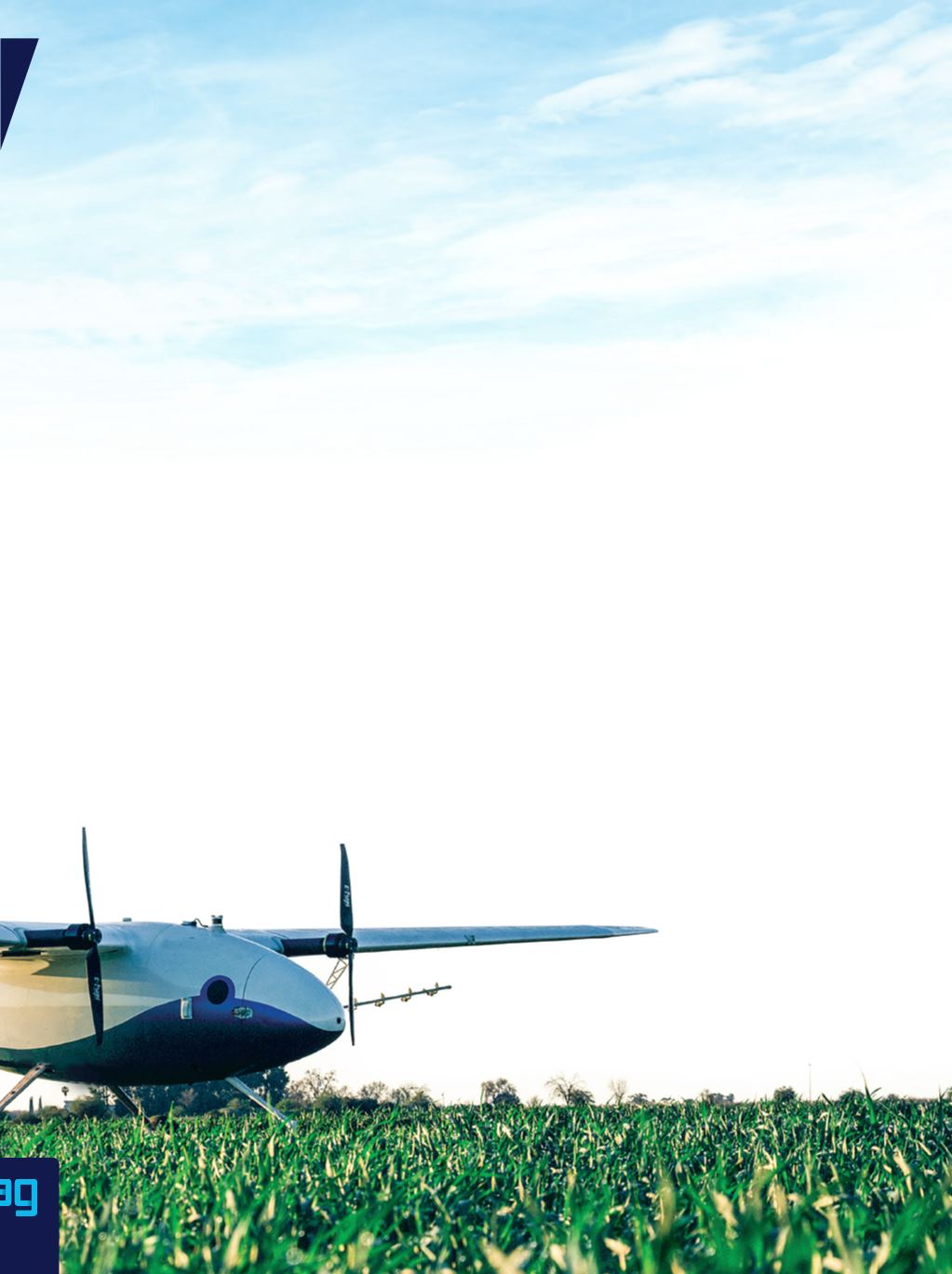
The drone comes by its name honestly in looks—it’s
a big, bulky-looking bird, but like its namesake, it is
smooth in the air.
Standing seven feet high and with a swath width of 59
feet, it has an empty operating weight of 620 lbs with
the batteries and is capable of a maximum take-off and
landing weight of 1,320 lbs—the heavier weight could
be the chemical spray.
Much bigger than the drones we see flying around by
hobbyists, the Pelican Spray looks to be the size of a
full-length glider—only this bird has power and wheels
and has a wingspan of 47 feet.
Featuring four electric motors providing a combined
100 kW of power, it uses an 18 kWh lithium-ion battery,
which Pyka said should be replaced every 2,000 flight
hours. It uses four static propellers—two in front and
two behind the wing.
It can carry up to 540 lbs. (70 gallons) of liquid and
spray up to 240 acres per hour, though the Pyka team
flies it for 30 minutes (with a plus-10-minute reserve)
before landing to swap out the batteries.
The drone is 100 percent electric, and depending
on the available ground charging infrastructure, the
minimum recharge time is 60 minutes, though it only
takes five minutes to refill the liquid being delivered,
swap out the batteries, and complete the requisite
taxiing time.
Fast turnaround—yes, but in the sky, it can hit a
maximum application speed of 130 km/h.
It is also 100 percent autonomous—it can be operated
from anywhere—and it has been purpose-built for
industrial agricultural purposes.
And because the drone is capable of faster, tighter
turns—it has a turn radius of approximately 590 feet—
and can fly very low over a field, there is a reduced
chance of drift, which the company said can save
some 15 percent of the sprayable chemicals, which
saves the farm money.
Although the drone does have the capability to be
programmed and operated remotely, Pyka said that it
would need to first receive Beyond Visual Line of Sight
(BVLOS) approval.
Currently, one operator typically monitors the aircraft
through a visual line of sight, while another monitors
the autonomous control software. The drone uses
a single FPV (first-person view) camera for typical
operation.