



 16 / 30

How many bees does it take to work a
100-acre canola field?
BVT uses two hives per acre for canola.
Assuming it is peak summer, with full hives
of around 30,000 bees strong, maybe 15,000
of those bees forage or go to the canola. That
implies 200 hives at 15,000 foraging bees per
hive, which is around three million bees—but of
course, hives vary in bee numbers, activity, and
strength. The bottom line is that it takes a lot of
bees.
How long does the biological fungicide
last?
The product stays in the hives for the entire
pollination period for the bees to carry to the
flowers. For blueberries, that’s about four to eight
weeks; strawberries can take a few months;
and canola takes about two to three weeks. It
depends on the weather and the type of crop it
was applied to.
How does the farmer know it worked?
That’s a great question. We have worked with
many universities, CROs (contract research
organizations), farmers—you name it—to collect
data that supports the BVT product. The data
shows that our bee vectoring technology
reduces crop disease and increases yields.
Does the process work better with one
type of field over another? IE: Do the bees
have discriminating tastes?
Bees definitely have a preferred taste, and
some farms have struggled with pollination as
other resources became available to the bees.
However, bees do tend to feed on the
closest and most readily available meal,
which is normally the field they are
placed on.
Hasn’t there been a global shortage
of bees over the past 10+ years?
It is important to distinguish between the
commercial bees BVT uses and native bees.
Commercially raised and managed bees
(honeybees and some bumblebees) are going
to be just fine. They are well managed and
typically treated for diseases. And, while some
years can be hard for honeybees, they typically
bounce back over the summer, even if they
lose about 50 percent of their hives. It’s hard
work, and the beekeepers do stress about
their hives every year, but commercial bee
populations are increasing as the demand for
pollination increases. However, it is important
to acknowledge that native bees do need our
attention and care.
|
pag
Q
A
Q
A
Q
A
Q
A
Q
A
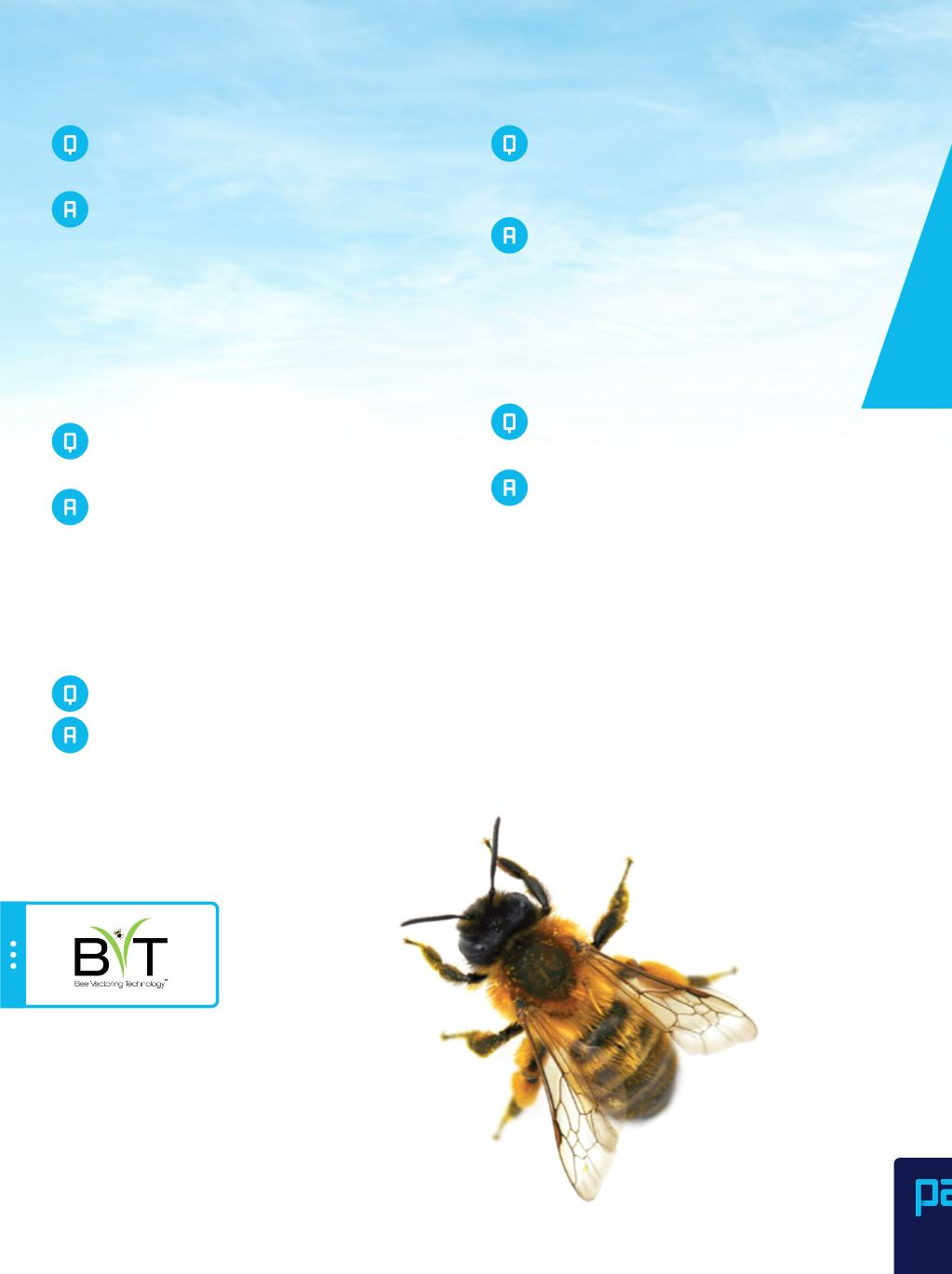
PHOTO: hhelene – stock.adobe.com
16